
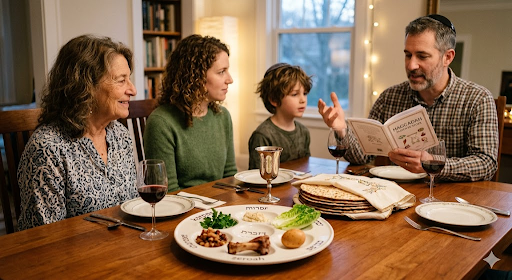
One of the most beautiful gifts of the liturgical church is the rhythm of the church calendar. There is such a deep, grounded strength in following the steps of those who walked before us. Over the years, we’ve come to truly treasure the intricacies of Holy Week—those historical touchpoints that help us remember who we are and whose we are.
We’ve gained so much by simply taking the time to slow down, reflect, and lean into a community of others on that same journey. Whether it’s the quiet reverence of Good Friday or the pure joy of Easter Sunday, these moments anchor us.
When we were raising our young children, we viewed Holy Week as a vital way to show them God’s faithfulness in “real-time.” I have to give all the credit to Gina for the incredible effort and heart she put into preparing for our Seder meals. We did our best to set a meaningful tone, hunt down the right ingredients, and create an experience that felt both fun for the kids and truly holy for all of us.
Is your church or community observing a Seder Meal this year? If you’re looking to bring this tradition into your own home or join with others, here is a streamlined guide to help you host or participate in a Seder that honors the story of the Exodus.
1. The Essentials: The Seder Plate
The Seder plate is the heart of the table. It holds six symbolic items that serve as a “sensory map” for the story:
| Item | Name | Symbolism |
| Karpas | Parsley/Greenery | Springtime and hope; dipped in salt water (tears). |
| Maror | Bitter Herbs | The bitterness of slavery (usually horseradish). |
| Chazeret | Second Bitter Herb | Often, romaine lettuce; used in the “Hillel Sandwich.” |
| Charoset | Fruit & Nut Paste | Represents the mortar used by Israelite slaves. |
| Zeroah | Roasted Bone | Symbolizes the Paschal sacrifice (a beet can be used for vegetarians). |
| Beitzah | Roasted Egg | Symbolizes the cycle of life and festival offerings. |
Quick Tip: Don’t forget three pieces of Matzah (unleavened bread) stacked and covered, and enough wine or grape juice for everyone to enjoy the traditional four cups.
2. The Haggadah (The Script)
The Haggadah is the book that guides you through the evening. Interestingly, “Seder” actually translates to “Order”—and there are 15 specific steps that help the story unfold:
- Kadeish: Sanctification (The 1st cup of wine).
- Urchatz: Washing the hands (without a blessing).
- Karpas: Dipping the green vegetable in salt water.
- Yachatz: Breaking the middle matzah. The larger piece becomes the Afikoman (hide this for the kids to find later!).
- Maggid: Telling the story. This is where the youngest person asks the Four Questions.
- Rachtzah: Washing the hands (with a blessing).
- Motzi Matzah: The blessing over the matzah.
- Maror: Tasting the bitter herbs.
- Koreich: Enjoying the “Hillel Sandwich” (matzah, maror, and charoset).
- Shulchan Oreich: The main festive meal—time to eat!
- Tzafun: Finding and eating the Afikoman.
- Bareich: Grace after the meal (The 3rd cup of wine).
- Hallel: Singing songs of praise (The 4th cup of wine).
- Nirtzah: The conclusion—”Next year in Jerusalem!”
3. Creating the Atmosphere
Remember, a Seder is meant to be engaging and relaxed, not stiff! In ancient tradition, people actually reclined while drinking their wine to show they were no longer slaves, but free people at rest.
- The Four Questions: If you have children at the table, lean into their curiosity. The Seder is designed to be a hand-off of faith to the next generation.
- The Cup of Elijah: We fill a cup and open the door to symbolically welcome the prophet Elijah, representing our hope for future redemption.
- The Ten Plagues: As you name each plague, it’s traditional to dip a finger in your wine and place a drop on your plate. It’s a somber, beautiful moment of empathy, acknowledging that our joy is lessened because others suffered for our freedom.
In a traditional Seder, the youngest child asks why this night is different from all other nights. Here is a simplified, kid-friendly version you can print out or practice with them:
The Four Questions: Why is this night different?
- On all other nights, we eat bread or crackers. Why on this night do we only eat Matzah?
- The Answer: Because our ancestors had to leave Egypt so quickly, their bread didn’t have time to rise!
- On all other nights, we eat all kinds of vegetables. Why on this night do we eat “Maror” (bitter herbs)?
- The Answer: To help us remember how bitter and hard it was to be slaves in Egypt.
- On all other nights, we don’t usually dip our food. Why on this night do we dip our food twice?
- The Answer: We dip parsley in salt water to remember tears, and we dip bitter herbs into sweet charoset to remember that even in hard times, there is hope.
- On all other nights, we sit up straight at the table. Why on this night do we recline and lean on pillows?
- The Answer: Because once we were slaves, but now we are free! Reclining was a sign of being a free person in the ancient world.
A Classic Seder Menu
- The Starter: Matzah Ball Soup, known affectionately as “Jewish Penicillin.” These are fluffy (or dense, depending on your family preference!) dumplings served in a clear, rich chicken broth with carrots and celery.
- The Main: Slow-Roasted Beef Brisket. This is the star of the show. Brisket is perfect for a Seder because it’s braised slowly with onions, carrots, and often a bit of tomato or red wine, making it incredibly tender. Plus, it’s even better when made a day ahead!
- The Side: Potato Kugel. Think of this as a savory, shredded potato casserole. It’s crispy on the edges and soft in the middle—the ultimate comfort food that pairs perfectly with the brisket gravy.
- The Vegetable: Roasted Tzimmes A colorful dish of roasted honey-glazed carrots and sweet potatoes, often tossed with dried plums (prunes) or apricots. It adds a lovely sweetness to the plate.
- The Sweet Finish: Flourless Chocolate Cake or Macaroons Since we don’t use flour (leavening) during Passover, a rich, dense chocolate cake or chewy coconut macaroons are the traditional way to end the night on a high note.
A Few Tips for a Kid-Friendly Seder Meal:
- The Reward: Since the kids have to wait through the first part of the Seder to get to the meal, many families have a small “treat” or prize ready for the child who finds the Afikoman (the hidden piece of Matzah) later in the night. It keeps the energy high!
- Let them Recline: If you want to make it “fun yet holy”, let the kids bring their favorite pillows to the dinner table. It’s a great visual for them to understand the difference between “slavery” and “rest.”
- One thing that makes the Seder meal unique is the timing. Because the “storytelling” (the Maggid) happens before the meal, guests can sometimes get a little “hangry” waiting for the brisket!
Have small bowls of salt water and extra parsley (Karpas) or even some plain nuts and dried fruit already on the table. It gives everyone something to nibble on while you’re going through the Hagaddah steps before the main course is served.
Ultimately, the Seder is more than just a meal; it is a living bridge between the past and the future. By making the effort to gather, to lean into the symbols, and to invite our children to ask their questions, we aren’t just recounting history—we are practicing faithfulness. Whether your table is perfectly set or beautifully chaotic, remember that the “holiness” of the evening comes from the shared journey and the quiet reminder that God is, and always has been, a deliverer. As you lift your cups and break the matzah this year, may you find fresh joy in the rhythm of the calendar and the enduring hope of the story we tell together.
