Have you ever had one of those “aha!” moments that happen when you aren’t even looking for it?
I recently picked up a book titled 7 Practices of Disciple Making Churches. It is a fascinating read—one of the few I’ve found that digs into the traits of North American churches that are quietly adopting the powerful principles used by global disciple-making movements. Unlike the high-profile mega-churches that usually dominate our newsfeeds, these networks often fly under the radar, focusing more on depth than on the spotlight.
Not long after I finished it, I was catching up with a leader who catalyzes disciple-making groups in his congregation. We were talking about the common struggle of knowing if we are actually “winning” at the right things. He looked at me and asked, “I know we’re busy, but are we actually making disciples? I wish I had a simple tool to help my team look under the hood and see how our ministry is really doing.”
That conversation sparked an idea. I wanted to take those seven powerful practices and turn them into a practical coaching guide—something you can sit down with, reflect on, and use to determine your very next step.
The 7 Practices: Where is Your Pulse?
I want to invite you to take a moment and look at these seven areas. As you read through them, ask yourself: Where are we thriving, and where is the fog starting to set in?
Convictional Leadership: Making disciples isn’t just a program; it’s the “main thing.” What is your church’s actual main thing right now?
Obedience-Based, Reproducible Models: We move from “how much do they know?” to “how are they obeying?” What metrics are you using to see if multiplication is happening?
Prayer and Scripture as Foundations: Disciples can’t grow on human effort alone. How are prayer and the Word integrated into your daily process?
Relational Community: Growth happens best in circles, not just rows. What percentage of your community is in a real disciple-making relationship?
Clear Pathways and Expectations: “If it’s foggy in your head, it’s confusing on a napkin.” Could your average member draw your discipleship pathway on a napkin in five minutes?
Mission Beyond the Walls: We make disciples for the sake of those who don’t know Jesus yet. How are you encouraging your people to step into the “Harvest”?
Leadership Alignment: Everyone needs to be working from the same blueprint. What is your plan to keep your leaders focused and engaged for the long haul?
If that leader’s question resonated with you, I’ve put together a tool to help you get the clarity you’re looking for. It’s a simple assessment designed to be done with your team. You’ll rate each practice to get clarity and determine where to focus.
It isn’t about judgment; it’s about stewardship. It’s about ensuring that the energy you and your team are pouring out is actually resulting in the Kingdom expansion we all long to see.
Are you ready to see where you stand? I’ve created an assessment to guide you and your team through the process to spark crucial conversations.
CLICK HERE to assess the Disciple-Making culture in your church!
Let’s move together from just managing crowds to truly multiplying the Kingdom. I’d love to hear what you discover as you walk through this with your team!
I recently finished 7 Practices of Disciple Making Churches, and it shifted my perspective. While the headlines usually go to the fastest-growing mega-churches, there’s a quiet, powerful movement of North American churches learning from global disciple-making movements. They aren’t worried about the spotlight; they’re concerned with the mission.
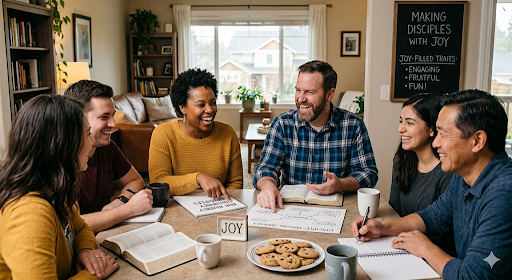
Ready to see where your church stands? Grab your team, some coffee, and let’s walk through these seven shifts together.
The 7 Practices: A Deep Dive
Use these summaries and questions to spark honest conversation. Don’t rush—the goal isn’t to finish the list, but to find the “North Star” for your ministry.
Practice
The Heart of the Matter
Reflection Question
1. Convictional Leadership
Making disciples isn’t a thing we do; it’s the main thing.
Honestly, what is our church’s current “main thing”?
2. Obedience-Based Models
We don’t just want smarter disciples; we want more obedient ones. Simplicity scales.
How do we actually measure if our disciples are multiplying?
3. Foundation of Prayer & Word
We can’t give what we don’t have. Growth is fueled by the Spirit and the Scripture.
How are prayer and Scripture woven into our daily process?
4. Relational Community
Growth happens in circles, not just rows. Relationships are the “greenhouse” for disciples.
What percentage of our people are in actual disciple-making relationships?
5. Clear Pathways
“If it’s foggy in your head, it’s confusing on a napkin.”
Can our leaders draw our disciple-making pathway on a napkin in 5 mins?
6. Mission Beyond the Walls
We don’t make disciples for the sake of the church; we do it for the sake of the world.
How are we equipping people to make disciples in the “Harvest”?
7. Leadership Alignment
We need everyone building from the same blueprint.
What is our long-term plan to keep leaders focused on this mission?
Gather your team and color-code your current reality. Be brave—honesty here is the first step toward health.
Green: On Mission (Keep doing what you’re doing!)
Yellow: Needs Work (Deep dive: What can we realistically change?)
Red: Off Mission (Stop and engage your best leaders in a “hard reset” conversation.)
Coach-Tip: If you’re stuck on where to start, look at Practice #1. If the leadership isn’t convicted, the rest of the engine won’t turn over.
Action Planning: Taking the First Step
Don’t try to fix all seven at once. Pick one “Red” or “Yellow” area this week.
Example: Practice #1 (Convictional Leadership)
The Goal: Refocus disciple-making as the “Main Thing.”
The Action: Audit your church calendar. For every activity, ask: “Is this directly helping us make a disciple who makes disciples?” * The Rating: Assign a Green, Yellow, or Red to every program on the books.
What is the Holy Spirit prompting you to look at first? Let’s get to work!
Since we’re always looking for ways to see the Kingdom expand, I wanted to share something that really caught my eye.
Do you ever find yourself wondering what it actually takes to move beyond just growing a crowd and start truly multiplying? I’m talking about the kind of movement where disciples are flourishing, leaders are rising up naturally, and healthy new churches are taking root.
I’ve been diving into the “Becoming a Level 5IVE Multiplying Church Field Guide” by Todd Wilson, Dave Ferguson, and Alan Hirsch. With their blessing, I’ve synthesized some of their best insights into a practical tool for you.
Curious about how this looks in your specific neck of the woods?
I’d love to send you a simple evaluation to help you get a clear pulse on multiplication in your own context. It’s a great way to spark some fresh vision with your team!
[CLICK HERE to request your Multiplication Evaluation.]
Have you ever sat in a service and heard something from the stage that made you tilt your head and think, “Wait, did they really just say that?”
I had one of those moments recently. A seasoned pastor—someone I know and respect—was sharing about his journey of planting the very church he leads today. He looked out at the congregation and said quite bluntly: “I will never do that again; it was so hard!”
Now, I get it. Church planting is grueling. It’s a “parachute drop” into the unknown that eats your margins, strains your family time, and often forces your high expectations to collide with a very messy reality. But here’s the kicker: this church’s vision is to be a church-planting church.
As I sat there, I couldn’t help but wonder about the aspiring leaders in the room. What did they hear? Did that honest confession feel like a breath of fresh air, or like a “keep out” sign?
It got me thinking about the core of our mission: Should making disciples actually be joyful?
Redefining the “Joy” Factor
When we talk about joy in ministry, we often drift toward James 1:2: “Consider it pure joy… whenever you face trials.” But let’s be honest—we usually apply that to enduring pain, not necessarily having a blast.
When I ask if disciple-making should be joyful, I’m asking:
Is it engaging?
Does the fulfillment outweigh the friction?
Is the “juice worth the squeeze”?
If we aren’t enjoying the process, we have to ask ourselves why. Is it the model? The context? Or have we just made things harder than they were meant to be?
Is Something “Eating Your Lunch”?
If you’re currently feeling like disciple-making is a chore rather than a calling, you might be hitting a wall you haven’t identified yet. Usually, the joy gets sucked out of the room by a few specific “fun-killers”:
The Boredom Barrier: People aren’t just busy; they’re rejecting invitations because the process feels dry.
The Overwhelm: You’re asking for a level of commitment that feels like a second full-time job.
The Complexity Trap: If it’s too complicated to explain, it’s too complicated to enjoy.
The Reproduction Problem: If the process isn’t effective or reproducible, you’re stuck doing all the heavy lifting yourself.
How to Find Your “Holy Fun” Again
If your answer to “Are you experiencing joy?” is a hesitant “sometimes” or a flat “no,” it’s time to change the variables. We serve a God of life and abundance—the mission shouldn’t feel like a slow march to burnout.
Here are three ways to shift the energy:
1. Reverse Engineer the Essentials: Rethink your pathway. Strip away the “religious fluff” and look at the absolute essentials of following Jesus. If you could only do three things to help someone grow, what would they be? Start there.
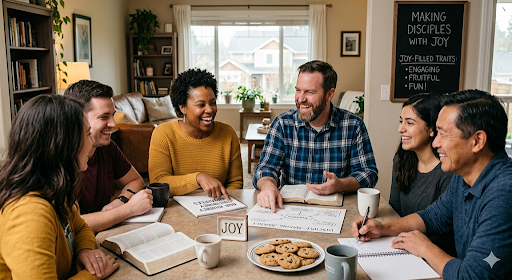
2. Don’t Walk Alone. Join a disciple-making cohort. There is incredible joy (and a lot of laughs) to be found in a community of people who are in the same trenches, sharing what’s working and what’s failing.
3. Map It Out. If the process is fuzzy in your mind, it will be frustrating in practice. Grab a whiteboard and map out the journey. Clarity brings peace, and peace is the cousin of joy.
I sincerely pray that your journey of making disciples is filled with more “I can’t believe I get to do this” moments than “I’ll never do that again” moments.
If you’re ready to try something different and test a new way of engaging people, I’d love to hear from you. Let’s make the mission something people actually want to join!
Are you currently experiencing joy in your disciple-making?
Where do I already spend the most time with people who don’t know Jesus?
What is one simple way I can show radical hospitality to a neighbor this week?
Who in my life seems to be ‘spiritually hungry’ or asking big questions right now?
What parts of my own faith journey feel most natural and joyful to share with others?
If I were to mentor just one person starting today, who would it be, and what is the first step?
Curious About Multiplication?
Do you wonder what it takes to multiply disciples, cultivate leaders, and plant healthy churches? I’ve synthesized a list from the “Becoming a Level 5IVE Multiplying Church Field Guide” by Todd Wilson, Dave Ferguson, and Alan Hirsch (with their permission). CLICK HERE to request a simple evaluation to help you look at multiplication in your context.
I recently had the privilege of participating in a virtual Lenten study led by Keith Meyers. If you aren’t familiar with Keith, he shared a deep friendship and professional collaboration with Dallas Willard that spanned over 30 years. Having pastored everything from small to mega-churches, including 17 years as the Executive Pastor of Church of the Open Door, Keith brings a wealth of wisdom to the table.
His recent book, Whole Life Transformation: Becoming the Change Your Church Needs, was actually endorsed by Dallas himself. It’s a must-read, especially if you’ve been feeling the tension of how to truly integrate spiritual formation into your own life and the rhythm of your congregation.
A Different Kind of Conversation About Eternity
During our final session, we dove into a topic Dallas famously called the “Abolishment of Death.” I found myself asking a question many of us wrestle with: “How do we describe the experience of those who have never heard the Gospel, or those who have rejected Jesus?”
Too often, our “church” answer is quick and clinical: “They are eternally separated from God in hell.”
But Keith shared a response that shifted my perspective, and I want to pass that along to you as fellow disciple-makers.
Dallas once said, “Hell is the best God can do for some people.”
The word “best” is the key there. Just as Abraham wrestled with the fate of Sodom and was reminded, “Will not the Righteous (the Good) Judge do justly?”, we can rest in the certainty that God will do His absolute best for every human being He has lovingly created in His image.
Every Knee Shall Bow—In Wonder, Not Fear
I remember Dallas talking about Philippians 2—where every knee bows and every tongue confesses. With his voice catching with emotion, he didn’t describe it as a moment of cringing fear. Instead, he saw it as a moment of revelation. People’s eyes will finally be opened, and they will fall down in worship because they finally see the God of Love in Jesus for who He truly is.
For those we know who struggle with the Christian life, or who haven’t heard the Gospel in the fullness that Dallas describes, we can have a deep hope. Many will jump with joy when they finally see Jesus. They will realize what they could have had, what they now will have, and what they wanted all along but never heard clearly. In the light of being like Jesus forever, this life will seem like a very short, old fairytale compared to the reality of growing in His love.
What Does This Mean for Us as Disciple-Makers?
I’m sharing this from where I am on my own journey, and I’d love for you to process it with me. If we view eternity through this lens of God’s goodness, it changes how we approach our mission:
A Gospel for Everyone: The Good News is all-encompassing. It removes any posture of superiority or “spiritual elitism.”
Patient Apprenticeship: If God is this patient and good, we can afford to be patient with a person’s growth. We don’t need to pressure people into “quick decisions.”
Clarity over Complexity: Our job is to make the path to becoming an apprentice of Jesus clear and inviting, rather than complicated and cumbersome.
Pause & Reflect
As you think about your own ministry and life, consider these questions:
What am I actually communicating when I share the Gospel?
In my teaching, what are people being saved from—and more importantly, what are they being saved to?
How well is our church aligned with this expansive view of the Gospel? Where are the gaps?
Curious About Multiplication?
If this perspective on the Gospel makes you curious about how faith multiplies, I’ve put together a resource for you. I’ve synthesized a list from the “Becoming a Level 5IVE Multiplying Church Field Guide” by Todd Wilson, Dave Ferguson, and Alan Hirsch.
[CLICK HERE] to access a simple evaluation I created to help you look at multiplication in your context.
How does this perspective on “God’s best” change the way you feel about the people in your neighborhood who haven’t yet met Jesus?
One of the most beautiful gifts of the liturgical church is the rhythm of the church calendar. There is such a deep, grounded strength in following the steps of those who walked before us. Over the years, we’ve come to truly treasure the intricacies of Holy Week—those historical touchpoints that help us remember who we are and whose we are.
We’ve gained so much by simply taking the time to slow down, reflect, and lean into a community of others on that same journey. Whether it’s the quiet reverence of Good Friday or the pure joy of Easter Sunday, these moments anchor us.
When we were raising our young children, we viewed Holy Week as a vital way to show them God’s faithfulness in “real-time.” I have to give all the credit to Gina for the incredible effort and heart she put into preparing for our Seder meals. We did our best to set a meaningful tone, hunt down the right ingredients, and create an experience that felt both fun for the kids and truly holy for all of us.
Is your church or community observing a Seder Meal this year? If you’re looking to bring this tradition into your own home or join with others, here is a streamlined guide to help you host or participate in a Seder that honors the story of the Exodus.
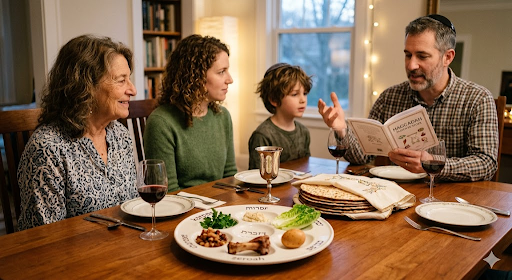
1. The Essentials: The Seder Plate
The Seder plate is the heart of the table. It holds six symbolic items that serve as a “sensory map” for the story:
Item
Name
Symbolism
Karpas
Parsley/Greenery
Springtime and hope; dipped in salt water (tears).
Maror
Bitter Herbs
The bitterness of slavery (usually horseradish).
Chazeret
Second Bitter Herb
Often, romaine lettuce; used in the “Hillel Sandwich.”
Charoset
Fruit & Nut Paste
Represents the mortar used by Israelite slaves.
Zeroah
Roasted Bone
Symbolizes the Paschal sacrifice (a beet can be used for vegetarians).
Beitzah
Roasted Egg
Symbolizes the cycle of life and festival offerings.
Quick Tip: Don’t forget three pieces of Matzah (unleavened bread) stacked and covered, and enough wine or grape juice for everyone to enjoy the traditional four cups.
2. The Haggadah (The Script)
The Haggadah is the book that guides you through the evening. Interestingly, “Seder” actually translates to “Order”—and there are 15 specific steps that help the story unfold:
Kadeish: Sanctification (The 1st cup of wine).
Urchatz: Washing the hands (without a blessing).
Karpas: Dipping the green vegetable in salt water.
Yachatz: Breaking the middle matzah. The larger piece becomes the Afikoman (hide this for the kids to find later!).
Maggid: Telling the story. This is where the youngest person asks the Four Questions.
Rachtzah: Washing the hands (with a blessing).
Motzi Matzah: The blessing over the matzah.
Maror: Tasting the bitter herbs.
Koreich: Enjoying the “Hillel Sandwich” (matzah, maror, and charoset).
Shulchan Oreich: The main festive meal—time to eat!
Tzafun: Finding and eating the Afikoman.
Bareich: Grace after the meal (The 3rd cup of wine).
Hallel: Singing songs of praise (The 4th cup of wine).
Nirtzah: The conclusion—”Next year in Jerusalem!”
3. Creating the Atmosphere
Remember, a Seder is meant to be engaging and relaxed, not stiff! In ancient tradition, people actually reclined while drinking their wine to show they were no longer slaves, but free people at rest.
The Four Questions: If you have children at the table, lean into their curiosity. The Seder is designed to be a hand-off of faith to the next generation.
The Cup of Elijah: We fill a cup and open the door to symbolically welcome the prophet Elijah, representing our hope for future redemption.
The Ten Plagues: As you name each plague, it’s traditional to dip a finger in your wine and place a drop on your plate. It’s a somber, beautiful moment of empathy, acknowledging that our joy is lessened because others suffered for our freedom.
In a traditional Seder, the youngest child asks why this night is different from all other nights. Here is a simplified, kid-friendly version you can print out or practice with them:
The Four Questions: Why is this night different?
On all other nights, we eat bread or crackers. Why on this night do we only eat Matzah?
The Answer: Because our ancestors had to leave Egypt so quickly, their bread didn’t have time to rise!
On all other nights, we eat all kinds of vegetables. Why on this night do we eat “Maror” (bitter herbs)?
The Answer: To help us remember how bitter and hard it was to be slaves in Egypt.
On all other nights, we don’t usually dip our food. Why on this night do we dip our food twice?
The Answer: We dip parsley in salt water to remember tears, and we dip bitter herbs into sweet charoset to remember that even in hard times, there is hope.
On all other nights, we sit up straight at the table. Why on this night do we recline and lean on pillows?
The Answer: Because once we were slaves, but now we are free! Reclining was a sign of being a free person in the ancient world.
A Classic Seder Menu
The Starter: Matzah Ball Soup, known affectionately as “Jewish Penicillin.” These are fluffy (or dense, depending on your family preference!) dumplings served in a clear, rich chicken broth with carrots and celery.
The Main: Slow-Roasted Beef Brisket. This is the star of the show. Brisket is perfect for a Seder because it’s braised slowly with onions, carrots, and often a bit of tomato or red wine, making it incredibly tender. Plus, it’s even better when made a day ahead!
The Side: Potato Kugel. Think of this as a savory, shredded potato casserole. It’s crispy on the edges and soft in the middle—the ultimate comfort food that pairs perfectly with the brisket gravy.
The Vegetable: Roasted Tzimmes A colorful dish of roasted honey-glazed carrots and sweet potatoes, often tossed with dried plums (prunes) or apricots. It adds a lovely sweetness to the plate.
The Sweet Finish: Flourless Chocolate Cake or Macaroons Since we don’t use flour (leavening) during Passover, a rich, dense chocolate cake or chewy coconut macaroons are the traditional way to end the night on a high note.
A Few Tips for a Kid-Friendly Seder Meal:
The Reward: Since the kids have to wait through the first part of the Seder to get to the meal, many families have a small “treat” or prize ready for the child who finds the Afikoman (the hidden piece of Matzah) later in the night. It keeps the energy high!
Let them Recline: If you want to make it “fun yet holy”, let the kids bring their favorite pillows to the dinner table. It’s a great visual for them to understand the difference between “slavery” and “rest.”
One thing that makes the Seder meal unique is the timing. Because the “storytelling” (the Maggid) happens before the meal, guests can sometimes get a little “hangry” waiting for the brisket!
Have small bowls of salt water and extra parsley (Karpas) or even some plain nuts and dried fruit already on the table. It gives everyone something to nibble on while you’re going through the Hagaddah steps before the main course is served.
Ultimately, the Seder is more than just a meal; it is a living bridge between the past and the future. By making the effort to gather, to lean into the symbols, and to invite our children to ask their questions, we aren’t just recounting history—we are practicing faithfulness. Whether your table is perfectly set or beautifully chaotic, remember that the “holiness” of the evening comes from the shared journey and the quiet reminder that God is, and always has been, a deliverer. As you lift your cups and break the matzah this year, may you find fresh joy in the rhythm of the calendar and the enduring hope of the story we tell together.
We use cookies to optimize our website and our service.
Functional
Always active
The technical storage or access is strictly necessary for the legitimate purpose of enabling the use of a specific service explicitly requested by the subscriber or user, or for the sole purpose of carrying out the transmission of a communication over an electronic communications network.
Preferences
The technical storage or access is necessary for the legitimate purpose of storing preferences that are not requested by the subscriber or user.
Statistics
The technical storage or access that is used exclusively for statistical purposes.The technical storage or access that is used exclusively for anonymous statistical purposes. Without a subpoena, voluntary compliance on the part of your Internet Service Provider, or additional records from a third party, information stored or retrieved for this purpose alone cannot usually be used to identify you.
Marketing
The technical storage or access is required to create user profiles to send advertising, or to track the user on a website or across several websites for similar marketing purposes.