
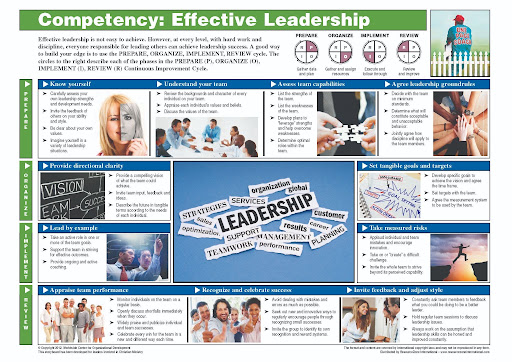
I’ve recently been working alongside an incredible team of leaders who coach pastors across their region. To kick things off, I introduced a leadership self-assessment called the Leadership Effectiveness Profile. It offers a quick, comprehensive snapshot of effectiveness across eight vital skill areas:
- Emotional intelligence
- Contextual thinking
- Directional clarity
- Creative assimilation
- Change orchestration
- People enablement
- Reciprocal communication
- Driving persistence
It’s always revealing! And tucked away at the back of the resource is a practical worksheet for building a Personal Development Plan.
While the profile itself is fantastic, what really brought the experience to life was a live exercise I did with one of the participants. We used it to frame a real-world journey of leading an actual team through a four-phase development process: Prepare, Organize, Implement, and Review (You can picture that rhythm mapped out in the upper right corner).
Suddenly, the conversation shifted. We weren’t talking about nebulous ideas or theoretical leadership models anymore—we stepped straight into the real situations that give our work teeth.
The Effective Leadership Storyboard: Your Visual Line of Sight
Think of a storyboard as your visual line of sight—a clear, guiding map that takes you from where you are today to where you are called to be as a leader. By stepping back and looking at the bigger picture, you can walk purposefully through three transformative Development Outcomes:
1. Navigate the Journey: Identify the foundational stages—Prepare, Organize, Implement, and Review—so you always know your next best step.
2. Sharpen Your Discernment: Recognize the distinct characteristics of both effective and ineffective strategies, helping you choose actions that truly bear fruit.
3. Cultivate Personal Growth: Discover and lean into the specific behaviors designed to equip you for your unique future leadership goals.
5 Steps to Engage a Leader in Growth & Development
If you’re looking to spark meaningful growth with someone you lead or coach, here are five steps to bring it all together:
- Identify the Context: Help the leader pin down a real, live situation. Maybe it’s a team they’re actively guiding, a problem they are currently bogged down in, or an individual who isn’t quite pulling in the same direction as the rest.
- Assess Where They Are: Ask them to locate themselves on the storyboard framework. They might find themselves in one box, or spanning two or more all at once. From there, prioritize which area is most pressing today.
- Reflect on Their Skills: Connect the dots by identifying which leadership skills are most critical given their current phase on the journey.
- Brainstorm Ideas: Open up the possibilities. Encourage them to look at the specific skills required for that stage, and brainstorm ways to grow the most under-developed areas that are essential to moving forward.
- Plan Personally: Invite the leader to do the heavy lifting. Give them space to write out their intentions clearly—what they plan to do, how they will achieve it, the timeline, and the support they’ll need along the way.
Where does this work?
Here are three areas this resource could be of help to you. Let’s assume you are the lead pastor or a denominational leader.
- Personally – provides a framework of how to work with your team through the journey
- Empowering others – think of people on your team who would benefit from you coming alongside them to develop their team
Where are you finding the greatest traction in your leadership journey right now? If you would love to explore how to take that next step, let’s set up a brief, 30-minute conversation to let us know how we can help – CLICK HERE.