
Ever stumbled across a single comment in a podcast that made you completely pause and rethink a common workplace practice?
I was recently reading a book by a highly respected author who brought up 360-degree feedback assessments, and he dropped a surprising conclusion: 360 feedback is actually unhelpful to the person receiving it.
At first, that might sound counterintuitive. We’ve been taught that more feedback is always better, right? But as he broke it down, the reasoning really resonated.
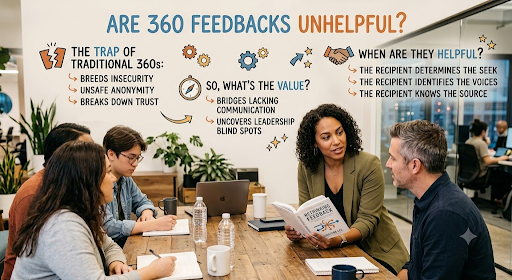
Why Traditional 360s Fall Short
When you look under the hood, traditional 360-degree reviews often backfire for three main reasons:
- They breed insecurity: Instead of inspiring growth, getting a massive dump of critique often leaves people feeling defensive, overwhelmed, and second-guessing themselves.
- Anonymity makes them feel unsafe: When feedback is anonymous, it loses its context. It leaves the recipient trying to guess who said what, turning a growth exercise into a psychological mystery game.
- They break down trust: Rather than bringing a team closer together, secret critiques can create paranoia and weaken the authentic bonds between colleagues.
Do 360s Have Any Value?
That’s not to say 360s are completely useless. They do serve a purpose in specific scenarios:
- Filling a cultural gap: If a team lacks a healthy, everyday culture of open communication, a formal 360 can serve as a temporary bridge to get people talking.
- Uncovering blind spots: For leaders who truly have no idea how their behavior impacts others, the raw data can be a necessary wake-up call.
Flipping the Script: How to Make 360s Work
So, how do we fix this? I had a conversation with a leader of a mission agency recently and discussed how 360 assessments can actually be transformative, but only when we hand the steering wheel back to the team member.
Feedback becomes genuinely helpful when:
1. The recipient drives the focus: They decide what specific areas they want feedback on.
2. The recipient chooses the voices: They select the colleagues whose perspectives they value and trust.
3. Transparency replaces anonymity: They know exactly who gave what feedback, creating a safe space for real, constructive follow-up conversations.
When we shift from evaluating people in secret to empowering them to ask for the insights they need, feedback stops being a source of anxiety and becomes the powerful tool for growth it was always meant to be.